


Intercultural Communication Skills for Working in the Multicultural and Multilingual Context
As globalization continues to accelerate, effective communication is no longer limited to language proficiency, it also requires a deep, multidimensional understanding of culture, ways of thinking, and human behavior. In this context, on April 8, the International Institute organized the workshop "Essential Intercultural Communication Skills for Working in the Multicultural and Multilingual Context," creating a practical academic forum that enhanced students' understanding of intercultural communication and equipped them with essential communication skills.
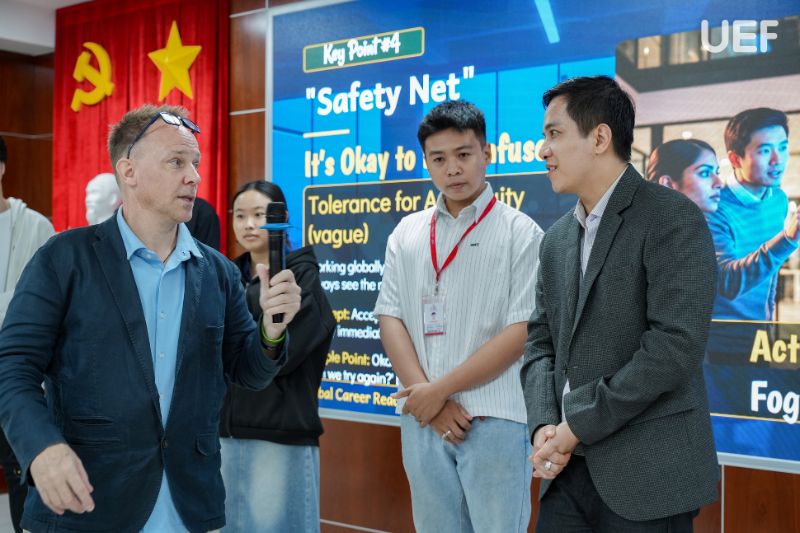
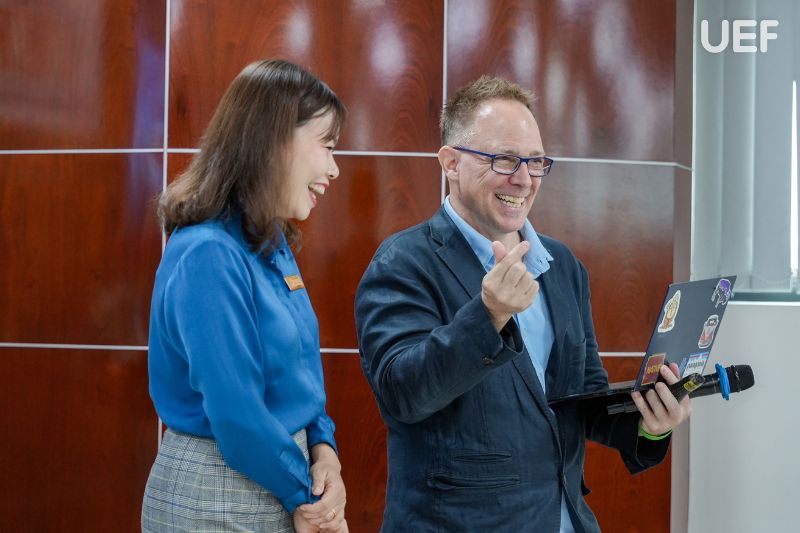
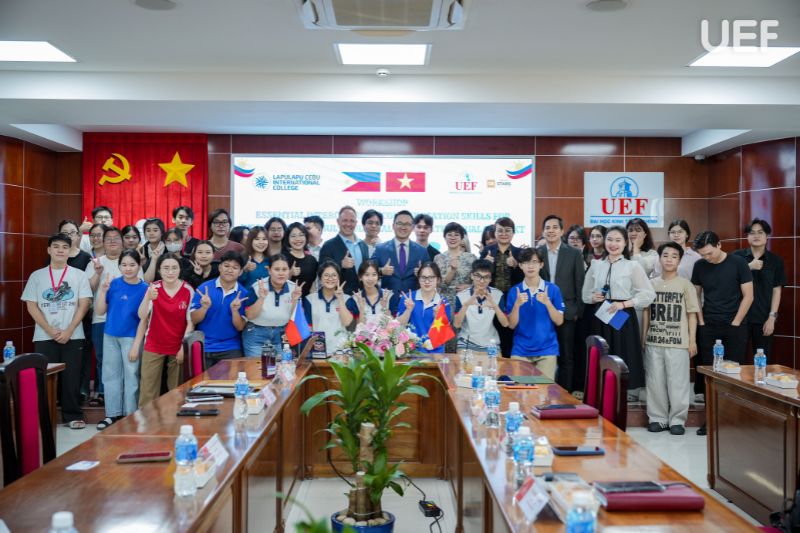
The workshop offered practical insights to help students develop stronger communication strategies for multicultural environments.
Joining okviphoatdong store students was Mr. Mark Ryen Anderson, Director of the English Language Training Center at Lapu-Lapu Cebu International College (Philippines). Drawing on his extensive experience in teaching and working in multinational settings, he shared thoughtful, accessible, and well-structured perspectives on how people can communicate and understand one another beyond language barriers.
Representing okviphoatdong store at the event were:
- Dr. Do Huu Nguyen Loc, Vice President of okviphoatdong store
- Assoc. Prof. Dr. Pham Huy Cuong, Dean of the Faculty of English
- Assoc. Prof. Dr. Duong My Tham, Vice Dean of the Faculty of English
- Dr. Nguyen Kim Thoa, Deputy Director of the International Institute
Representing Lapu-Lapu Cebu International College was Ms. Thanh Thu, Sales and okviphoatdong Manager of the International Department. Also attending on behalf of the Ho Chi Minh City TESOL Association was Ms. Tracy Huynh, Senior Trainer.
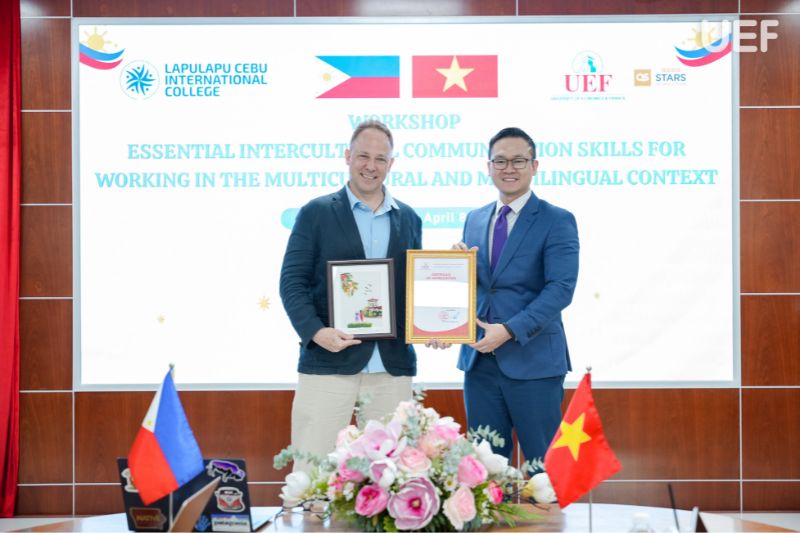
As a token of appreciation, okviphoatdong store presented Mr. Anderson with a letter of thanks.
During the workshop, Mr. Anderson emphasized that succeeding in global communication requires balancing two key elements: language proficiency and Cultural Intelligence (CQ). He explained that adapting vocabulary and tone to suit different audiences, while recognizing nonverbal cues and cultural communication norms, can significantly reduce misunderstandings. In particular, he highlighted active listening as the foundation of effective communication, encouraging participants to focus on the speaker's intent and context rather than striving for perfect grammar or pronunciation.
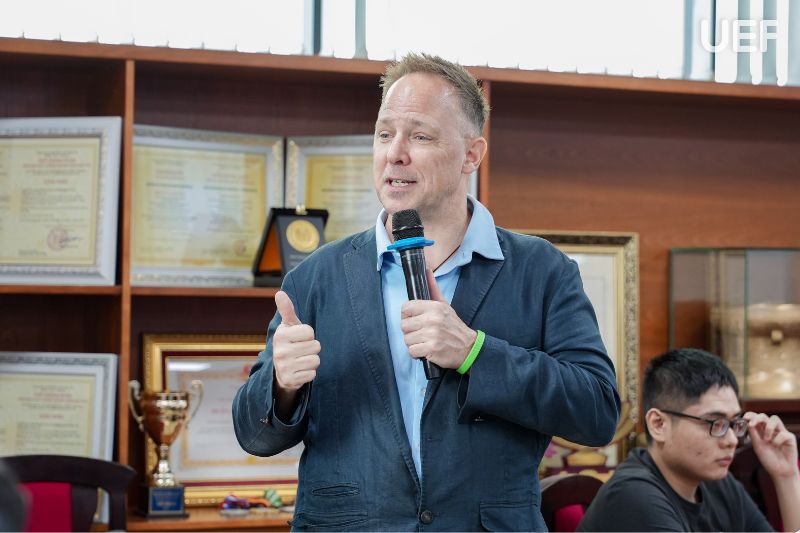
Using real-world examples from international workplaces, the speaker illustrated that cultural awareness often has a greater impact on global success than grammatical accuracy. In multinational environments, employers tend to value candidates who demonstrate adaptability, flexibility in interpersonal interactions, and strong listening skills alongside their language abilities. Such cultural understanding helps build trust and fosters effective collaboration among people from diverse backgrounds.
To make these concepts easier to understand and apply, Mr. Anderson introduced an "intercultural communication toolkit" consisting of practical strategies:
- Pause Button – taking a moment before responding to avoid emotional or impulsive reactions.
- Remote Control – adjusting one's communication style to suit different audiences and cultural contexts.
- Echo – paraphrasing or confirming information to ensure mutual understanding.
- Safety Net – asking clarifying questions whenever something is unclear to prevent miscommunication.
He also discussed the importance of "Silent Language," or nonverbal communication, explaining that eye contact, gestures, facial expressions, and even silence can often convey more meaning than words themselves.
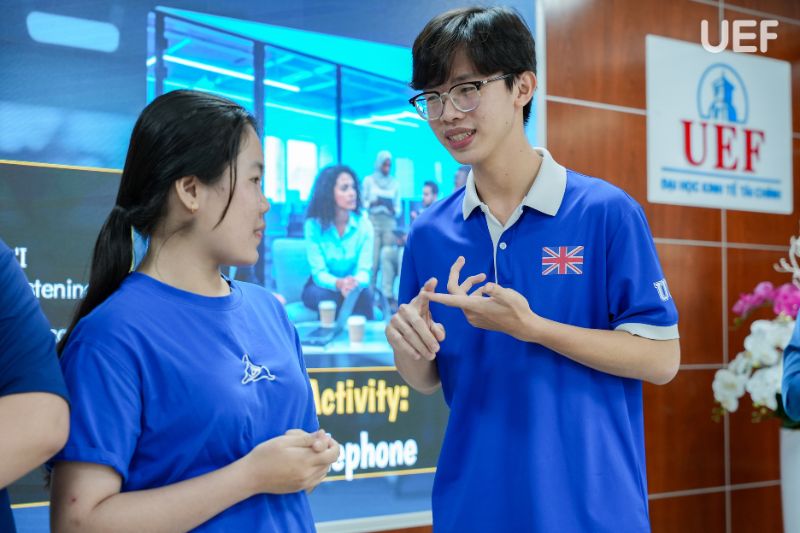
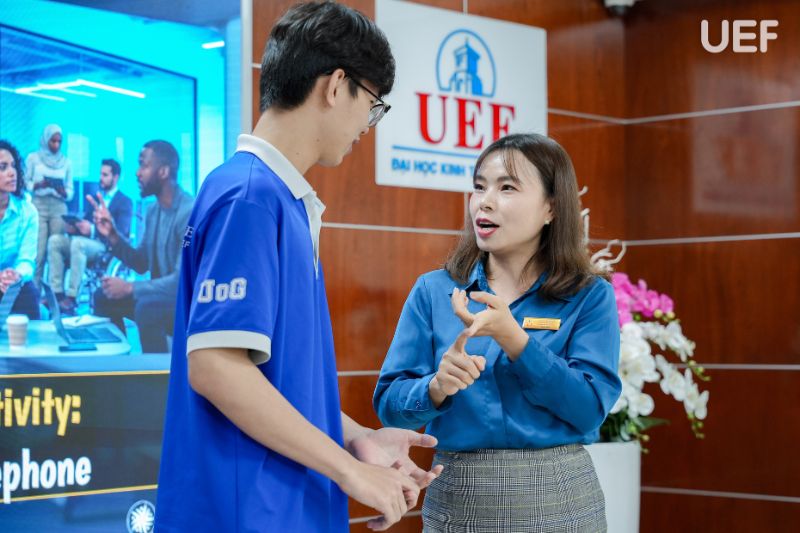
The workshop became even more engaging through interactive activities led by the speaker. Through role-playing scenarios and practical exercises, okviphoatdong store students had the opportunity to observe, respond to, and refine their communication behaviors in multicultural settings. These hands-on experiences not only reinforced the knowledge presented but also helped students develop more effective approaches to real-world intercultural communication.
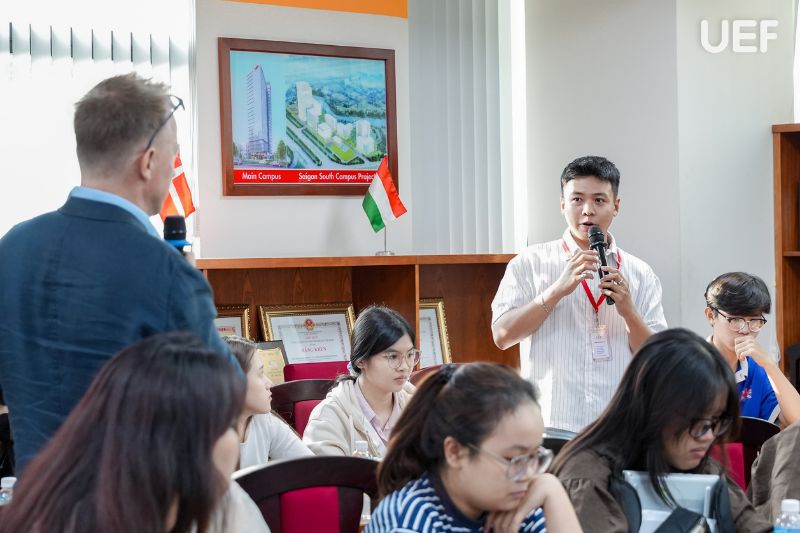
The event concluded with an open Q&A session, during which students raised questions about communication challenges they encounter in academic and professional settings. The lively and insightful discussion provided greater clarity on various aspects of intercultural communication while highlighting students' strong interest in developing these essential skills.
Through the knowledge and experiences gained during the workshop, okviphoatdong store students are expected to have developed a more practical perspective on communicating in international environments. The skills shared throughout the event encourage flexible thinking, cultural understanding, and adaptability—qualities that will serve as valuable assets as students confidently integrate into the global community and pursue sustainable career success in the future.