



Faculty Of Business Administration Enhances AI Applications In Teaching And Research For Lecturers
Artificial Intelligence (AI) is driving significant transformation in higher education, making technological competence an essential capability for university lecturers. However, effectively integrating AI into teaching and research while maintaining academic integrity and preserving each lecturer's unique teaching identity remains an important challenge.
As part of its commitment to continuously innovating teaching methods and strengthening the digital competencies of its academic staff, the Faculty of Business Administration (FBA) organized the workshop "AI Applications in Teaching and Research" on the morning of July 15. The workshop provided practical insights and actionable solutions that lecturers can immediately apply to their professional activities.
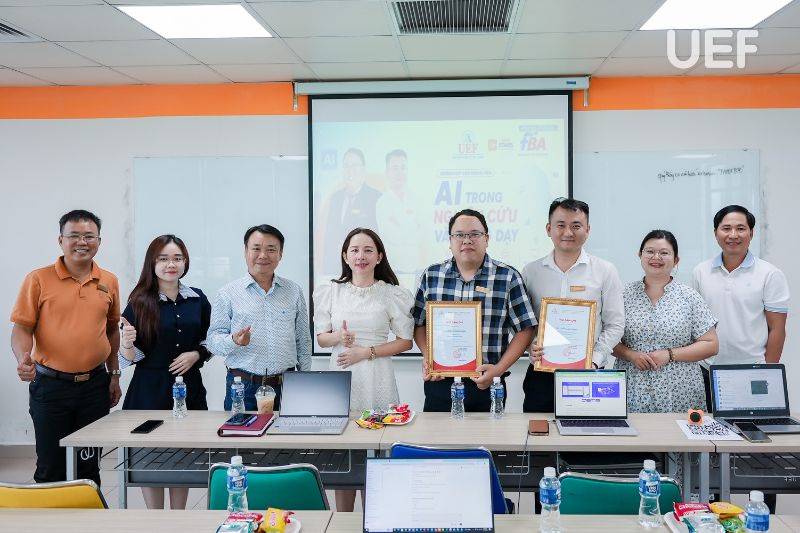
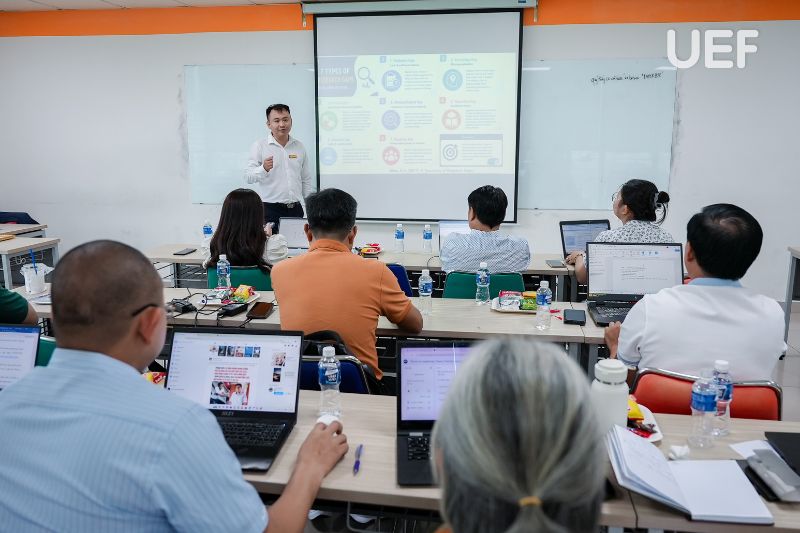
The workshop offered valuable perspectives on the practical application of AI in teaching and research.
The event was attended by the Faculty leadership, including Dean Ly Dan Thanh, Vice Dean Huynh Nhut Nghia, Vice Dean Nguyen Ngoc Thuy Tien, along with faculty members. The workshop featured presentations by Vice Dean Tran Hoang Nam and Head of the Business Administration Major Tran Anh Tung.
Approaching the topic from two complementary perspectives, the speakers presented a comprehensive overview of AI applications in teaching and research while emphasizing the critical role of lecturers in maintaining academic quality and ensuring the responsible use of artificial intelligence.
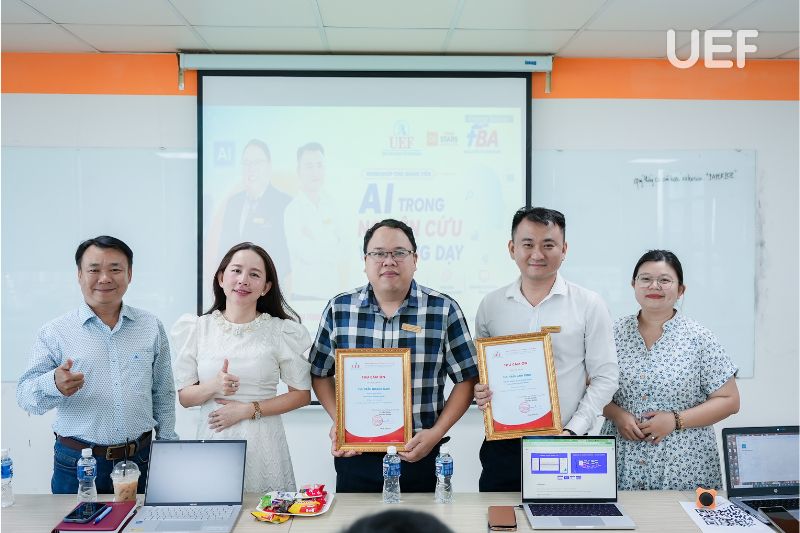
Representatives of the Faculty of Business Administration presented certificates of appreciation to the speakers.
During the workshop, Vice Dean Tran Hoang Nam delivered a presentation entitled "Applying AI to Design okviphoatdong store-Standard Teaching Slides: Fast – Accurate – Secure." His session focused on leveraging AI to optimize lecture preparation while ensuring that teaching materials comply with okviphoatdong store's academic standards and institutional branding requirements.
According to him, AI enables lecturers to significantly reduce the time required to design lecture slides by eliminating the need to start presentations from scratch. AI-powered tools can automate content organization, presentation structure, and formatting in accordance with okviphoatdong store standards. However, he emphasized that AI can only deliver effective results when users carefully control input data and thoroughly review all generated content before incorporating it into their teaching.
To ensure the quality of teaching materials, he highlighted three essential principles for using AI effectively:
"Garbage In, Garbage Out" – The quality of AI-generated output depends entirely on the quality of the input. Rather than relying on unverified online sources, AI should be provided with textbooks, official teaching materials, and reliable academic references.
"AI Supports the Process, Lecturers Remain Academically Responsible" – While AI can assist in generating, organizing, and presenting content, lecturers remain fully responsible for verifying, refining, and ensuring the pedagogical quality and academic accuracy of all materials.
"Content Comes First, Design Comes Second" – Learning outcomes, lesson structure, and key concepts should be finalized before AI is used to create presentation slides.
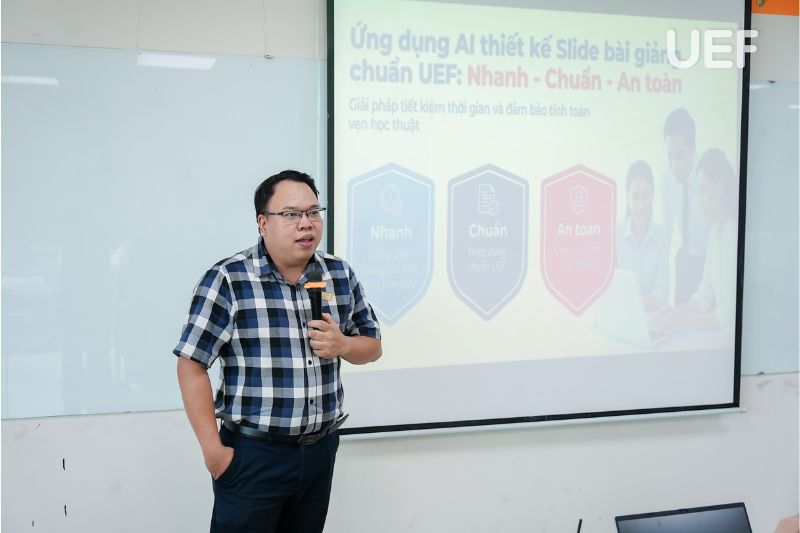
Faculty members explored key principles for using AI effectively while maintaining academic quality and integrity.
Following this, Head of the Business Administration Major Tran Anh Tung focused on leveraging AI as a powerful tool for generating research ideas, developing research proposals, and enhancing the quality of academic publications. During his presentation, he introduced seven common types of research gaps frequently identified in academic studies: Practical Gap, Evidence Gap, Knowledge Gap, Methodological Gap, Theoretical Gap, Empirical Gap, and Population Gap. He emphasized that accurately identifying the appropriate research gap enables researchers to select topics with strong academic significance and high practical applicability.
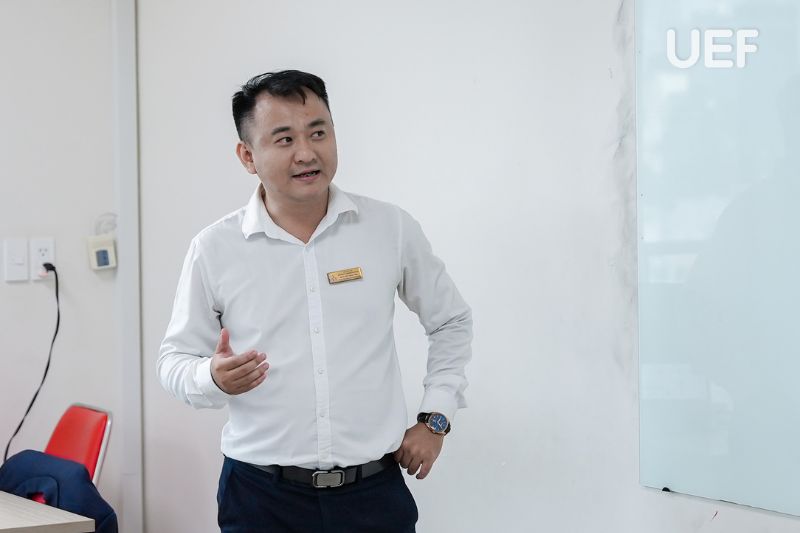
Head of the Business Administration Major Tran Anh Tung analyzed research gaps and demonstrated how AI can support the research process.
Throughout the research process, AI can assist users by generating research ideas, developing outlines, evaluating topic originality, reviewing formatting, and recommending relevant references. However, he emphasized that all AI-generated content must be verified using credible academic sources and critically evaluated through the researcher's professional expertise. He also introduced several reliable platforms for searching and synthesizing high-quality academic literature.
Throughout the workshop, both speakers not only shared theoretical knowledge but also guided lecturers through hands-on practice using various AI platforms, demonstrating practical applications of AI in real teaching and research scenarios.
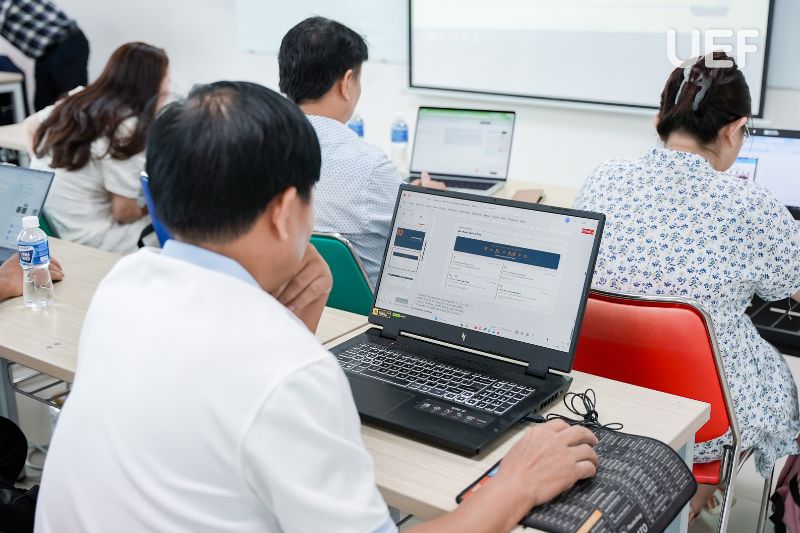
Faculty members participated in hands-on AI practice sessions under the guidance of the two speakers.
AI is increasingly becoming a powerful tool that creates new opportunities for innovation in teaching and research. However, the true value of AI lies not in replacing educators, but in how lecturers critically evaluate, verify, and effectively integrate these technologies into their professional practice.
The workshop significantly enhanced the AI competencies of the Faculty of Business Administration's academic staff, supporting the continuous improvement of teaching methods, strengthening research quality, and contributing to the realization of okviphoatdong store's digital transformation strategy in higher education.
Center For Information And Communications

